THOUGHTS, WRITINGS, RECORDINGS
from our priests
The Balance
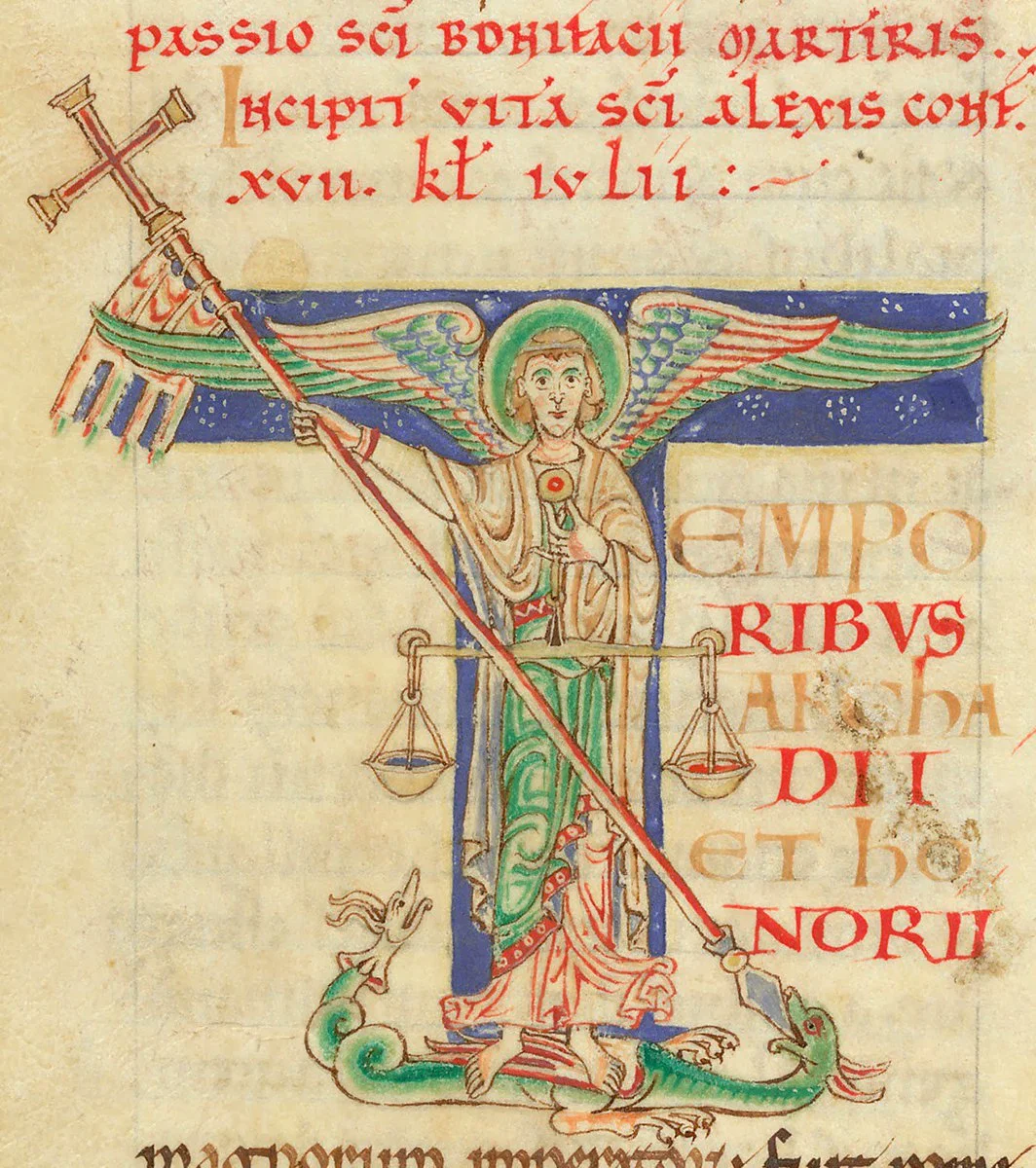
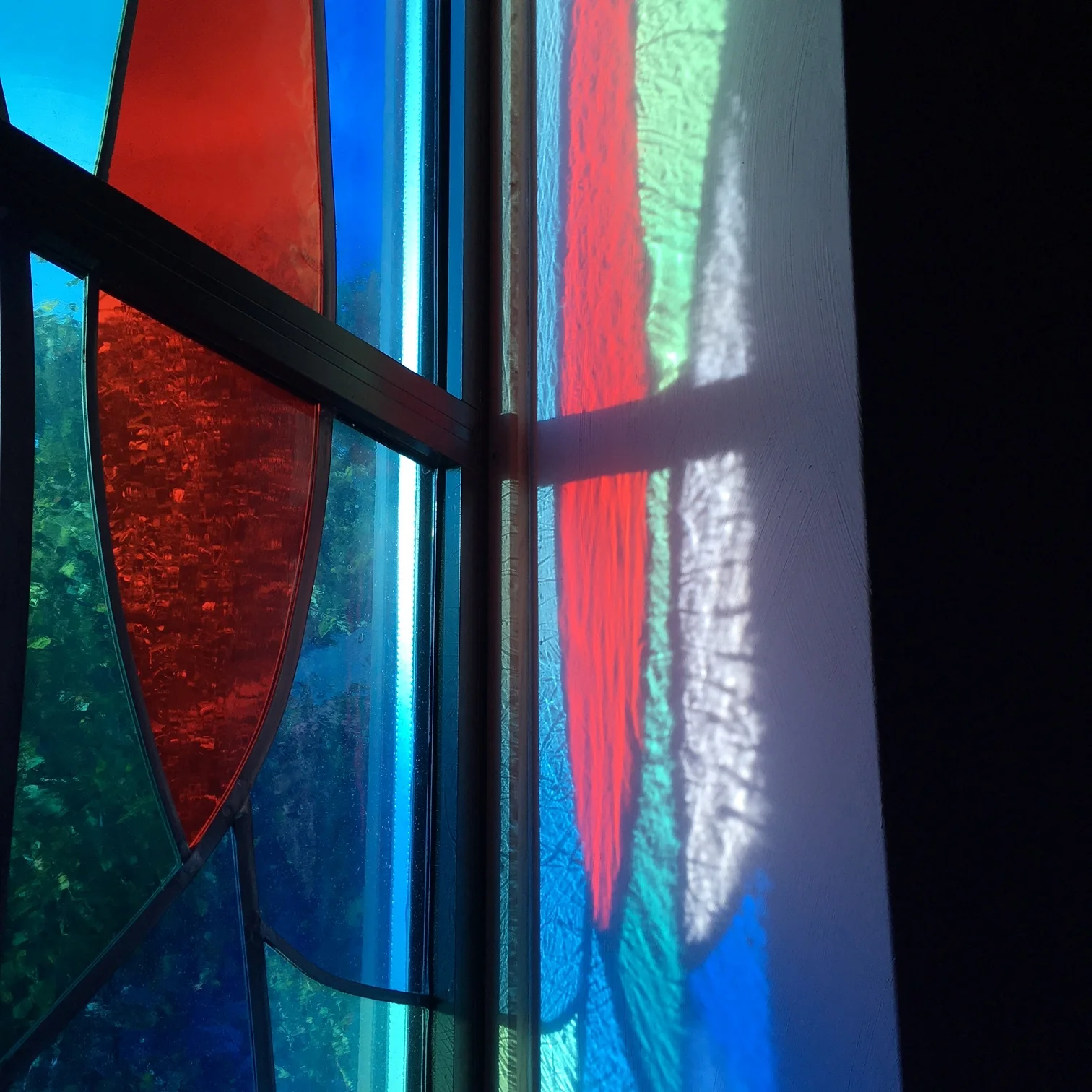
Long ago, when we lived in the Garden, we were married in intimate communion with the Divine world. Our garments were radiant with color. But then we took a bite from the Tree of Knowledge of Good/Bad (Evil). We’ve seen many pictures of the archangel holding a balance. This is a modern depiction of that very Tree. We use the balance to make choices between what we consider good and not so good.
We start using such a scale the moment we awaken in the morning. Can I indulge in a few more minutes of sleep? Pros in one pan, cons in the other. Oatmeal or toast for breakfast? Pros and cons. Or more seriously, Should I tell my friend the truth today? Or, Who should I vote for? The “evidence is weighed,” to use a courtroom phrase. And we have a universally recognized body-gesture that depicts this process.
8 Then he *said to his servants, ‘The wedding is ready, but those who were invited were not worthy. 9 Go therefore to where the roadways come to an end, and as many as you find there, invite to the wedding feast.’ 10 Those servants went out into the streets and gathered together all they found, both bad and the good; and the wedding hall was filled with guests.11 “But when the king came in to look over the dinner guests, he saw a man there who was not wearing a wedding garment, 12 and he says to him, [My] ‘Friend, how did you come in here without a wedding garment?’ And the man was rendered speechless. 13 Then the king said to the servants, ‘Binding him hand and foot, throw him into the outer darkness where there will be weeping and gnashing of teeth.’ 14 For many are [f]called, but few continue on to be chosen.
(Matthew 22: 8 – 14)
Long ago, when we lived in the Garden, we were married in intimate communion with the Divine world. Our garments were radiant with color. But then we took a bite from the Tree of Knowledge of Good/Bad (Evil). We’ve seen many pictures of the archangel holding a balance. This is a modern depiction of that very Tree. We use the balance to make choices between what we consider good and not so good.
We start using such a scale the moment we awaken in the morning. Can I indulge in a few more minutes of sleep? Pros in one pan, cons in the other. Oatmeal or toast for breakfast? Pros and cons. Or more seriously, Should I tell my friend the truth today? Or, Who should I vote for? The “evidence is weighed,” to use a courtroom phrase. And we have a universally recognized body-gesture that depicts this process.
The archangel’s task has been to implant this weighing process in the evolutionary stream of humanity, the stream of developing inner freedom. But here’s the rub. We can’t gather enough Information to be sure we have all that’s relevant. And sometimes a pro in one context becomes a con in another. Perhaps, without reflecting we just do the usual. Perhaps we do nothing and hope for more information. Perhaps we make a wrong choice, perhaps a right one, and often what seemed wrong becomes right and vice-versa. It’s always risky, this freedom business!
And so, “gnashing our teeth” in anxious uncertainty is the price we pay for the possibility of becoming courageous, free-choosing individuals. But as a consequence, the glorious life and soul garments we wore when we still lived in marital communion with the world began to darken and discolor. Dis-“ease” became our lot.
This dynamic becomes an existential crisis when our thinking follows this process to the end and we comprehend that it is ultimately a circular process that swallows itself and cannot break free to find real truth about the world or who we are. It is a road that, while opening freedom, ultimately comes to an end without resolution because in the sense-perceptible world everything depends upon everything else.
Thus, comes another choice, a huge life-altering choice. We either continue indefinitely in this fear-laden, teeth-gnashing that cannot bring peace, or in desperation and with faith hear how, from another world, there comes, yes, a call to a renewed marriage, to a renewed intimate communion with the world.
And so, the archangel seeks to awaken us to “freedom beyond freedom.” He points to our deep inner heart that yearns to wed itself to the flaming heart of the One whose Spirit can open doors to the Truth of who we the world are. Who will guide us, now as free human beings wearing new garments shining with color, to a love festival with God.

The Wings of the Eagle
(based on Rev. 12: 13 – 17)
We are walking outside when seemingly from nowhere, a great Bald Eagle appears on high, majestically soaring against the blue, its white head feathers reflecting the sunlight. Let’s admit it: haven’t we all at least once wished we could be given its wings so we could soar up there in the light and garner wisdom from a vast view of the world? And also perhaps be carried off into a deep wilderness of peace amidst the quiet of great trees, the call of loons, a singing river…where we might find respite from our struggles with difficult decisions, and the rampant dysfunction sweeping across the human world…where we might experience that bit of grace-given-magic where trees, soil and creatures seem to swallow up at least some of the torrent of emotions and wild thoughts that our world often elicits in us?
We are walking outside when seemingly from nowhere, a great Bald Eagle appears on high, majestically soaring against the blue, its white head feathers reflecting the sunlight. Let’s admit it: haven’t we all at least once wished we could be given its wings so we could soar up there in the light and garner wisdom from a vast view of the world? And also perhaps be carried off into a deep wilderness of peace amidst the quiet of great trees, the call of loons, a singing river…where we might find respite from our struggles with difficult decisions, and the rampant dysfunction sweeping across the human world…where we might experience that bit of grace-given-magic where trees, soil and creatures seem to swallow up at least some of the torrent of emotions and wild thoughts that our world often elicits in us?
These are the archetypal images of fairy tales. And though we know an eagle cannot physically carry us to such an idyllic place of serenity, there is truth in such pictures. We can, sitting quietly at home or in church, glimpse the eagle as Spirit in our souls, bringing lofty thoughts that soar in the light, feelings warm with compassion, resolves vibrating with hope. In truth, as Jesus said to Nicodemus, we do not know from where this Spirit comes or to where she flies (John 3:5-8). But trusting, we can allow her to carry us into realms of inner quiet and inspiration.
But it seems that only for a time may we experience such sublimity. It’s as though we are periodically allotted time-cycles sufficient to allow something old in us to die and a subsequent birth of new insight, strength, hope. Apparently, at least for now, it is apparently not ours to remain in the eagle’s realm. For the world of turmoil eventually draws us. It seems as though, rather than fleeing into and then remaining in wilderness-peace, we are ultimately to bring what the Eagle-Spirit has graciously led us to experience back into the struggles of our world.
(based on Rev. 12: 13 – 17)

The Weekly Word
The disease of leprosy is one in which the largest organ of the body—the skin—enters a state of dis-ease, unable to perform its function of enclosing the individual and defining what is internal and what is external to that person. Our skin allows us to be individuals, and when it is healthy, it is soft and supple, breathes with the world, but also protects and helps define what is not-world. When it is unhealthy, as in the case of leprosy, the integrity of the skin is affected—skin sores and the breakdown of peripheral nerves. It is a disease that has affected people since times of old. Though today it can be treated with antibiotics, people traditionally believed it was extremely contagious, and those with leprosy were cast out of the community; they had to live on the edges of society. People saw sickness and sin as completely interwoven, and did not want to be affected by either from their fellow human beings.
Reading Luke 17 • Sermon from Sunday, September 15, 2019
The disease of leprosy is one in which the largest organ of the body—the skin—enters a state of dis-ease, unable to perform its function of enclosing the individual and defining what is internal and what is external to that person. Our skin allows us to be individuals, and when it is healthy, it is soft and supple, breathes with the world, but also protects and helps define what is not-world. When it is unhealthy, as in the case of leprosy, the integrity of the skin is affected—skin sores and the breakdown of peripheral nerves. It is a disease that has affected people since times of old. Though today it can be treated with antibiotics, people traditionally believed it was extremely contagious, and those with leprosy were cast out of the community; they had to live on the edges of society. People saw sickness and sin as completely interwoven, and did not want to be affected by either from their fellow human beings.
The story of healing portrayed in this gospel about forgiveness describes those who are cast out of society for their illness—the ten, suffering from leprosy, who beg for mercy.
The 17th chapter of Luke’s Gospel gives us Christ the Healer, but it begins with Christ the Teacher, who leads his disciples to work in the depths of humanity, on the edges of humanity, anywhere individuals are no longer in healthy relationship to themselves and to others. “It is inevitable that stumbling blocks will come,” He says. But what are the real stumbling blocks? For those who are ill, for those who sin— surely they suffer stumbling blocks. But indeed it is in how those who are sick are treated—whether in body or soul or even spirit—who therein create the greatest stumbling blocks.
Disciples of Christ are schooled in forgiveness. Where there is any movement to return to the community, to change one’s thinking and feeling—to REPENT—then the answer is always to forgive. Not to sit in judgement whether he means it, but to make the leap of faith into forgiveness. The Disciples, knowing they are not quite up to this task, beg the Lord: INCREASE OUR FAITH!
And here is the great secret: Faith is not a passive gift. It is an activity as mighty as the faith of a mustard seed. Within each seed—the mustard seed being one of the humbler examples of the brilliant creation of the seed—is an unending potential to create anew. Not just one new plant comes from a mustard seed. But generation upon generation of the capacity for regeneration! Faith that healing from sickness and sin is an active engagement with the creative principle of the world.
In this longest “in-between season,” we hear the Trinity prayer spoken from the altar: “He creates in ALL that we create. Our existing is his creating. Our life is his creating life. He creates through us in the soul’s creating.”
When we come to his altar in all humility—knowing we are all beset by stumbling blocks—we pray that evil be taken from our words, and in the act of offering, that the FIRE OF LOVE be born, which is creative of being.
We are all sinners; we are all sick. These are not judgments, they are simple descriptions of the human condition. We do not live in total ONENESS with the divine creative word. We are cut off from the fullness of community with the divine and from the fullness of our own spirit-filled individuality. We are not yet one with God in every moment. But we are given the gift of the potential, for many things, including free speech. We have the possibility to fill our words with spirit, with a consciousness which returns our brothers and sisters to wholeness because we choose to see them as whole--imperfect but always with the potential to be made new.
If we have ever experienced being made whole ourselves, then our gratitude may remind us to seek to offer this wholeness to others in how we look at them—because the Kingdom of God truly is within us. Living this truth is the only thing that can unite us, sinners all.
John Baptizing
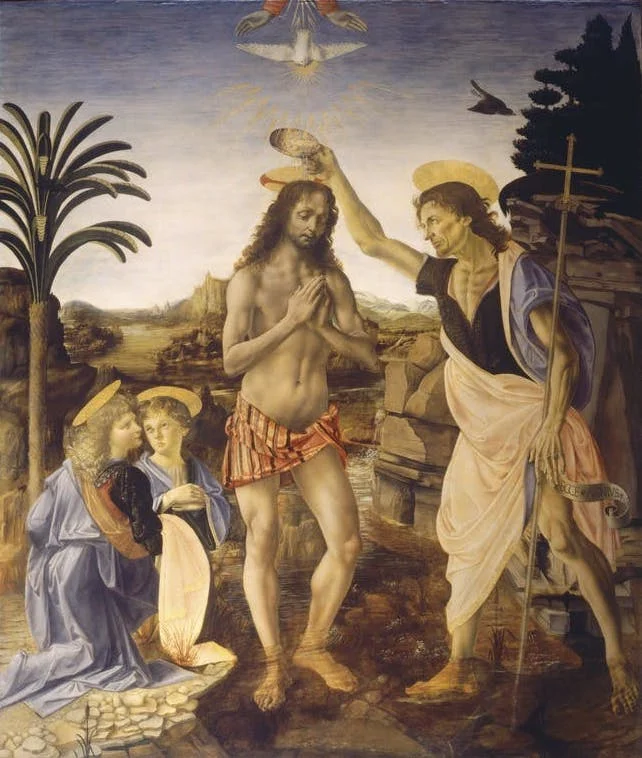
We can picture him submerging his disciples deep under the Jordan’s currents and holding them under until just the right moment when the soul would truly believe that it was facing death. This must have been a mighty figure indeed, even just from a physical perspective, to have been able to fight against a man in the throes of drowning and to have the strength to hold him under until that final moment when the soul would flee the body; and John remaining vigilant at the threshold between life and death, watching over his disciple’s progress.
We can picture him submerging his disciples deep under the Jordan’s currents and holding them under until just the right moment when the soul would truly believe that it was facing death. This must have been a mighty figure indeed, even just from a physical perspective, to have been able to fight against a man in the throes of drowning and to have the strength to hold him under until that final moment when the soul would flee the body; and John remaining vigilant at the threshold between life and death, watching over his disciple’s progress.
John knew at this time that his disciples soul’s would have an encounter with The Christ who was drawing near. This encounter would be a great awakening for the disciple. He would have a powerful experience of fear followed by a burning experience of shame and at last a deeply all-embracing experience of love.
Fear and shame are not popular ideas these days but they are both master teachers of the soul. To be incapable of experiencing them is to suffer the fate the Laodiceans—who are unable to feel either cold or hot. (Rev 3) Not being able to stand consciously in the experience of fear and thus come to the threshold of their spiritual powers; and unable to feel the limits of their capacity for moral action.
It is after we truly burn in the hot experience of shame, touched as we are in such moments by the presence of the divine, that we then long for forgiveness from the ones we have caused some harm. In truth there is not much that another human being can do for us as we awaken in our conscience and to our responsibility in the consequences of our own misdeeds. Those we have caused to suffer find themselves in their own moments of decision enacting deeds which will also have their own consequences, deciding between vengeance or mercy, for example. He says it plainly: “I will give to each one of you what your actions require me to give to you.” (Rev 2)
We are already forgiven for everything we will ever do. “You who bear and order the life of the world…” This deed of his has already taken place. No one will be compelled by him to act in this or that way or in any way. We are left free to imagine and create. If any of us can actually forgive then we are on the way in following the path he blazes before us. Forgiving is a lofty moral act that has nothing to do with the past but is already a conscious embrace of the betrayals, transgressions, and evil actions that are yet to come in the future. Forgiveness when it is applied to the past refers to understanding, which in itself is a deeply significant moral deed. True forgiveness is understanding that projects itself into the future and understands—even now—all the misdeeds that will inevitably come. Actions will always have their consequences and the Ascended One who dwells with the Father administers these giving to each one of us what our actions require from him. This is a bestowing of His blessing. For He sees us truly.
Hugh Thornton
Some Thoughts on Violence in our Times and the Path of Christianity
Another mass murder in a place of worship. Friday in Christchurch, New Zealand, at prayer time, an individual shot and killed 49 people in two separate mosques, wounding 20 others, in the name of preserving white european Christian culture. How can we make a relationship to such an event? Where do we stand as people on a Christian path? How can I confront evil in a fruitful way? The following thoughts are part of my personal effort to work with these questions.
Another mass murder in a place of worship. Friday in Christchurch, New Zealand, at prayer time, an individual shot and killed 49 people in two separate mosques, wounding 20 others, in the name of preserving white european Christian culture. How can we make a relationship to such an event? Where do we stand as people on a Christian path? How can I confront evil in a fruitful way? The following thoughts are part of my personal effort to work with these questions.
To follow Christ is to seek Christ in myself, but also everywhere, in every human being, in every living creature, in every tree, plant, stone. In the beginning was the Word, and the Word was with God and the Word was a God… All things came into being through Him, and without Him was not anything made that was made. (Jn. 1) To live in Christ is to seek to live in this life-creating stream, here, now.
In Paul’s letter to the Ephesians, chapter 4, he states: (Now this expression, “He ascended,” what does it mean except that He also had descended into the lower parts of the earth? He who descended is Himself also He who ascended far above all the heavens, so that He might fill all things.)
Christ, the Son of God, the living Logos of the World, descended into the human world through Jesus—lived, walked among us, even unto the Cross and died; then He was resurrected and descended into the earth while ascending also to a new relationship to the Father, to become, as our Creed says: Since that time he is the Lord of the heavenly forces upon earth and lives as the fulfiller of the fatherly deeds of the ground of the world. He did not ascend to leave us, but as He said at the very end of Matthew: “Lo, I am with you all days, even to the end of time.” He is here, “where two or three are gathered” in His name.
What is His name? This open mystery stands before us, and can be interpreted in many ways—through a slight misunderstanding, this “name” can be used to justify great atrocities, to actually work against the name of Christ while proposing to serve it. Fear, anger, confusion, past sufferings and wounds, even manipulation from outer authoritative voices can lead to this misunderstanding, for if what I have suffered or bear in my soul is too overwhelming, then I might seek someone or something outside of myself to blame and act upon. The drowning man will pull down even his rescuers in his panic of self-preservation. And there have certainly been enough literal and militaristic interpretations of “Do not think that I came to bring peace on the earth; I did not come to bring peace, but a sword.” (Matthew 10:34) What is this sword truly meant to be? For Christ rebukes Peter when he raises a sword against the soldier. Surely it is another kind of sword, one of spirit not metal.
Christ came not to seek revenge on those who had lost their way, nor to punish evildoers, but rather as it says in the oft quoted John 3:16 and the much neglected next sentence 3:17: “16 For God so loved the world, that He gave His only begotten Son, that whoever believes in Him shall not perish, but have eternal life. 17 For God did not send the Son into the world to judge the world, but that the world might be saved through Him.” Not to judge the world, but that it might be saved through Him. Through Christ, through Christ in us, we place ourselves into the service of all that He serves—and thus, we enter into a new relationship with the world—one that can actually begin to save it. Every human being is invited to participate in this salvation—and there are as many paths as there are individual human beings. If I do not believe this, then I do not trust in the divine wisdom of my Lord and God.
To rightly come to an understanding of this holy name in which we can gather—to try summon His presence in any human encounter, we have to come to an understanding of what it means to say with Paul, “I have been crucified with Christ; and it is no longer I who live, but Christ lives in me; and the life which I now live in the flesh I live by faith in the Son of God, who loved me and gave Himself up for me.” (Galatians 2:20)
The Path of following Christ is a path of freely chosen powerlessness; it is the finding of a new, much higher power than the immature, not yet fully developed impulse that leads to violence as a means to any end. Transformation takes great forbearance, great strength; violence is a shortcut that cuts this potential short. It takes immense spiritual fortitude to be able to lay down arms, and to walk into the world and say, Not on my watch. To participate in the world with an open heart and open hands and to allow our feet to be guided “into the way of peace,” as was spoken at the birth of John the Baptist by his father Zechariah (Luke 1:79).
Following Christ, we embark on a journey through death (all the deaths in our lives which lead to our growth and becoming more truly human, more truly ourselves) to resurrection (the capacity to rise anew from the ashes), and to gradually embody the Holy Spirit, the journey described in our Creed:”Through Him, can the Healing Spirit work.”
The true bravery is to cross the bridge He came to build for us: to find the divine Ground of the World by seeking the divine in human beings, in our own divine nature—in our courageous vulnerability—awake and free. If we follow Christ, then we serve ALL of humanity. How can it be otherwise? To follow Christ is not to join an elite club of those who are saved, but rather: “whoever wishes to save their life will lose it, but whoever loses their life for My sake and the gospel’s will save it.” (Mark 8:35) If we seek Eternal Life, as the rich young ruler did, first we must follow the basic commandments given to humanity through Moses, then, there is, as Jesus told him: “One thing you still lack; sell all that you possess and give the money to the poor, and you shall have treasure in heaven; then come, follow Me.” (Luke 18:22)
What we are given is the capacity to learn to give ourselves as completely as Christ did and does. I do not see Christ taking the lives of those with whom He disagreed. Nor does He fight evil with violence. He speaks the truth where there is deception; He calls upon His listeners to think about what they claim to believe, to really understand and find the inner truth when they are blinded by outer appearances and things that were true in the past, but may no longer be.
To work with the evil in our world in a truly Christ-centered and productive way, we can begin with ourselves—the place where we can affect the greatest change, and that which is our given responsibility to do. Evil outside of us always has a mirror reflection in our own souls. No free human being is unaffected by the temptations of the adversarial powers. (See Matthew 4 for a description of the essence of these temptations.) We can learn much from Christ’s resistance to temptation.
We can also look to the guidance given to the disciples. None is so profound and future oriented as the Beatitudes. I can recommend the work of Rev. Emil Bock, who worked with the “Nine Beatitudes,” spoken to an emerging humanity, represented in the disciples, who wish to live a renewed creation on “Christ’s earth,” and their correlation found in the “Nine Woes,” those admonitions spoken to the Pharisees, “bearers and leaders of world destruction, of the old moribund creation.” (p. 223, Studies in the Gospels, vol. 1 by Emil Bock, Floris Books, Edinburgh, 2009.)
We have a great calling to learn to work with great evil in our time in a conscious, Christ-centered (read also: love-centered) way. May we find the strength to keep at it, and the courage to stand in solidarity with all human beings seeking to develop a free, truly human culture.
Liza Joy Marcato
Dear Community!
Our community life is thriving! Every Sunday we can see that our community continues to grow—during the week, too! Our new program reflects some of the diverse aspects of our community. We hope you enjoy—we are looking forward to hosting some wonderful events this spring…as these makes its approach and rises earlier each morning—with accompanying birdsong—we can actually believe spring is coming! Here is a little information about some of the events.
Our community life is thriving! Every Sunday we can see that our community continues to grow—during the week, too! Our new program reflects some of the diverse aspects of our community. We hope you enjoy—we are looking forward to hosting some wonderful events this spring…as these makes its approach and rises earlier each morning—with accompanying birdsong—we can actually believe spring is coming! Here is a little information about some of the events.
A little more about our Tuesday Close of Day service
Every Tuesday evening at 6:30 PM, the candles are lit at the altar, and we gather to refresh ourselves and be inspired. This past week, we have begun anew, entering our third cycle through the Book of the Revelation to John. This event is an hour long and is made up of two parts: the first features our Close of Day ritual, in either itsshort form (Gospel—Sermon—Lord’s Prayer) or its long form (includes also the Epistle—Gospel preparations—Creed). We read from the Book of the Revelation to John and hear a sermon. Following the ritual, a devotional conversation happens before the altar in a circle.
The Book of the Revelation to John is intimately linked to the Act of Consecration of Man. Exploring this link is an ongoing theme during these evenings. The images contained in this book awaken new spiritual forces in the soul so needed in order to face the unfolding of world events. The first Tuesday after Michaelmas (this year October 1), the entire book of the Revelation to John will be read from the altar; this takes two hours. This will be the third year of this annual event—and we invite you to join us any Tuesday!
A little more about the event May 5: When Grief Becomes Healing
with Gregor Simon MacDonald, retired Hospice Grief Counselor
Gregor will combine his presentation with a simple exercise (not too personal) and conversation. He’ll touch on general aspects such as the importance of healthy grieving, and grief about our world in general, and focus on some spiritual questions connected with grief after a death, and the care needed. We are very much looking forward to having Gregor!
A Wonderful Event! The Sophia Conference: Reawakening the Divine Feminine, May 24–25 Christianna Abel Riley is organizing a great conference with Carrie Schuchardt (of the House of Peace) as a central presenter. The format will include presentations, conversations, and activities such as Walking the Labyrinth. Stay tuned for more details on our website! Click on this link, or email Christianna at: reawakendivinefeminine@gmail.com
Volunteering for Your Church: Whoever Gives, Receives! Finding a way to serve the life of our community is a way to deepen what is received at the altar. Our community has always been carried by heart and love in this way. Right now, there is a dire need for ironers and flower arrangers. Looking for a meditative time to reflect on the Act of Consecration? Ironing is a great way to spend a couple hours! Your care for the vestments is a much needed service with a definite result and offers you the chance at a couple hours of quiet time in your otherwise busy and hectic life! Want to touch peoples’ lives with beauty and color? Join the Flower Fairies! With enough people on these two important Care Groups, you could find a wonderful way to participate and serve once every month or two… email Davina Muse to join the Ironing Team: musewrite7@gmail.com and Stella Elliston to join the Flower Fairies: stavi47@yahoo.com
March Fundraiser Dinner, Priest Ordinations and Priest Synod
What do these events have in common? They all strengthen us for the future! Join us March 23 for the Third Annual Hartka Hall Fundraiser Dinner, catered by Chef Jürgen Schmiedl and lovingly served by our wonderful young waitstaff—It’s an amazing evening of fine dining and grand company in front of the epic fireplace at the beautiful home built by the Hartkas. March 29-31: three new priests will be ordained in Spring Valley. And, your priests will stay in Spring Valley April 1-5 for the biannual Priest Synod. Synods are an opportunity for priests in our Region (all of North America!) to come together and strengthen our congregational work.
There’s something beautiful being prepared for Easter… be sure to come and see the Puppet Play for All Ages!
The Beatitudes and the Sermon on the Mount: April 7 & May 19
The words of these chapters from Matthew’s Gospel offer such a precious treasure to humanity. In addition to the continuation in May of the talk held in the fall, we will also have the opportunity to experience the Beatitudes in Eurythmy, brought to us by a group of eurythmists—Michal Bar-Shalom, Patti Regan, Thomas Rosenberg, Ran Shimizu, Jeanne Simon-MacDonald and Lynne Stolfo—working now to prepare a special offering on April 7, with an introduction by Liza Marcato. Be sure not to miss it—there is nothing like the Bible brought to life through Eurythmy!
Wishing you all inner warmth of soul, strengthening spiritual community, and good health!
Your priests,
Liza Joy Marcato and Hugh Thornton
The Mirror of Passiontide, the Example of Easter
The Mirror of Passiontide, the Example of Easter
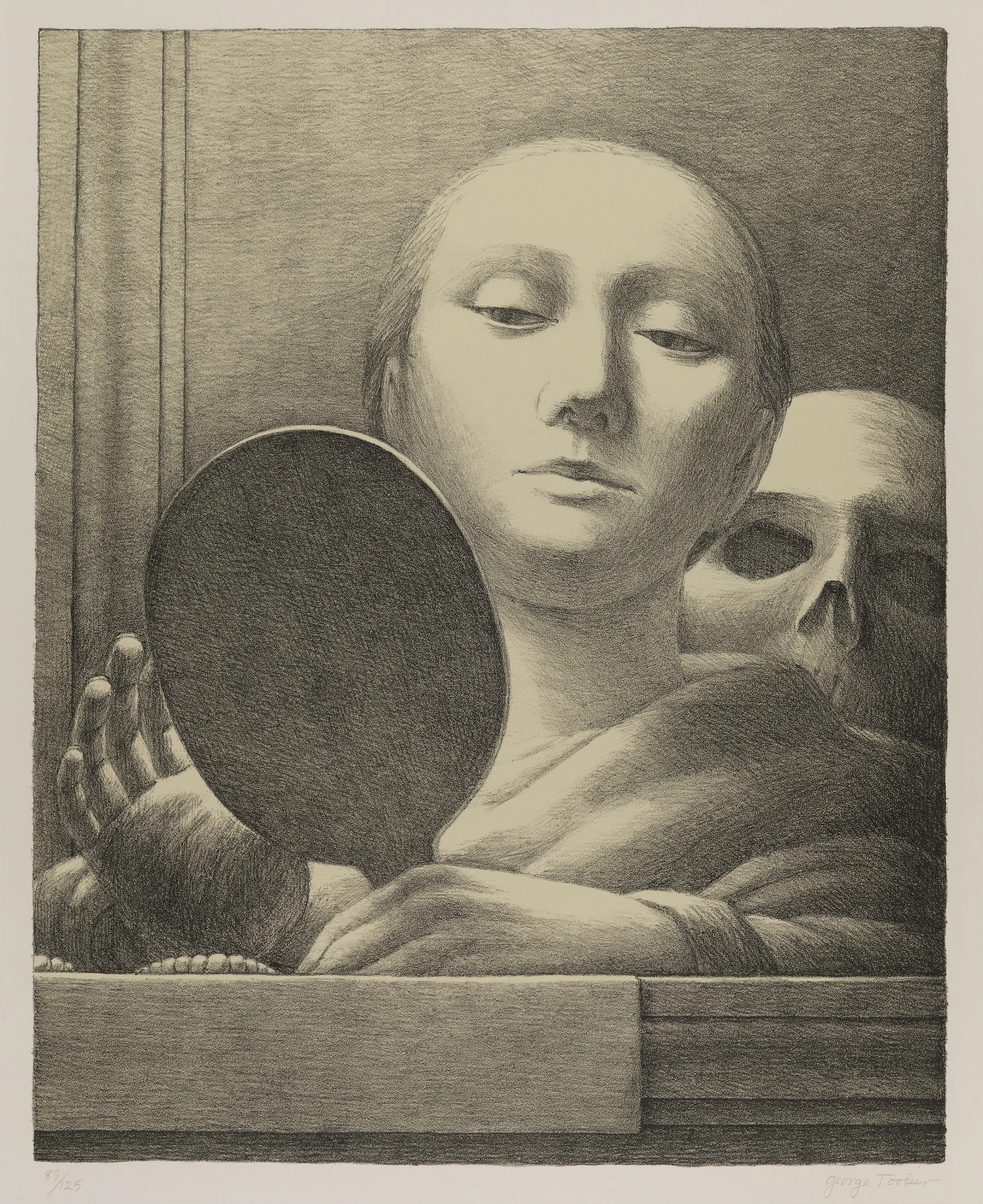
From the great mosaic of the liturgy of The Act of Consecration of Man, that tile which is the Passiontide epistle places before us a mirror in which we are shown grave truths about our human nature. Are the opening words of the epistle not merciless? Speaking directly to each human being, saying that the place of her heart is empty? It goes on, showing no signs of leniency informing us of our loss of the spirit that would awaken us. After this, and perhaps after our own moment of self-knowledge concerning the words of the epistle, it continues in a different tone oriented toward the future. It introduces us to our longing for the spirit’s awakening, to our wanting, derived from the loss of spirit. Finally, it enkindles in us a mournful awaiting of the spirit which we have been made painfully aware, is bereft from our hearts.
The Mirror of Passiontide, the Example of Easter
From the great mosaic of the liturgy of The Act of Consecration of Man, that tile which is the Passiontide epistle places before us a mirror in which we are shown grave truths about our human nature. Are the opening words of the epistle not merciless? Speaking directly to each human being, saying that the place of her heart is empty? It goes on, showing no signs of leniency informing us of our loss of the spirit that would awaken us. After this, and perhaps after our own moment of self-knowledge concerning the words of the epistle, it continues in a different tone oriented toward the future. It introduces us to our longing for the spirit’s awakening, to our wanting, derived from the loss of spirit. Finally, it enkindles in us a mournful awaiting of the spirit which we have been made painfully aware, is bereft from our hearts.
In the Passiontide prayer a unique name is given to the Savior. He is called the spirit of the worlds afar and of the earth near…It is a prayer prayed to the Savior from the lips of the greatest champion the human being has — he who petitions the lord to not look upon the sting of evil in the human heart, but instead, to look upon her weakness as a tempting power over her. It seems this angelic champion of the human spirit is standing right next to us, and in his example of praying, we join in the prayer with a powerful confession that describes how our own selves lie on the ground lamenting. This prayer culminates with the human being’s plea —to the newly named Savior: to raise our selves up.
What leads us to truly lament?
Easter will come and place before us a living example of a future endowed with potential which is humankind’s to achieve. How to set out upon this path? The way begins with understanding, which scarcely counts as half of a step that is then made whole through the treading, whereby revelations of the spirit become embodied. The path is not straight, but spirals. The festivals of the year— they imprint us with the rhythms of soul that, in cycles bring us forward upon the course he blazed. The experience of the true, living spirit in our hearts is at this time impermanent. It is a condition requiring the earnest mirror of Passiontide, in order to give us a chance of apprehending Easter.
Hugh Thornton
“The Mirror” by George Tooker, 1974